Present simple para las rutinas: con he y she, el verbo lleva -s o -es (She gets up at seven. He washes the car.). Always, usually, sometimes y never van delante del verbo (I usually walk to school), pero detrás de am, is y are (I am never late).
Present continuous para lo que pasa ahora: Look! It's raining. Past simple para lo que ya pasó: Yesterday I cleaned my room. Last summer we swam in the sea. Going to para los planes: We're going to visit London.
Para comparar: small → smaller than, fast → the fastest. La hora: quarter past (y cuarto), half past (y media), quarter to (menos cuarto).
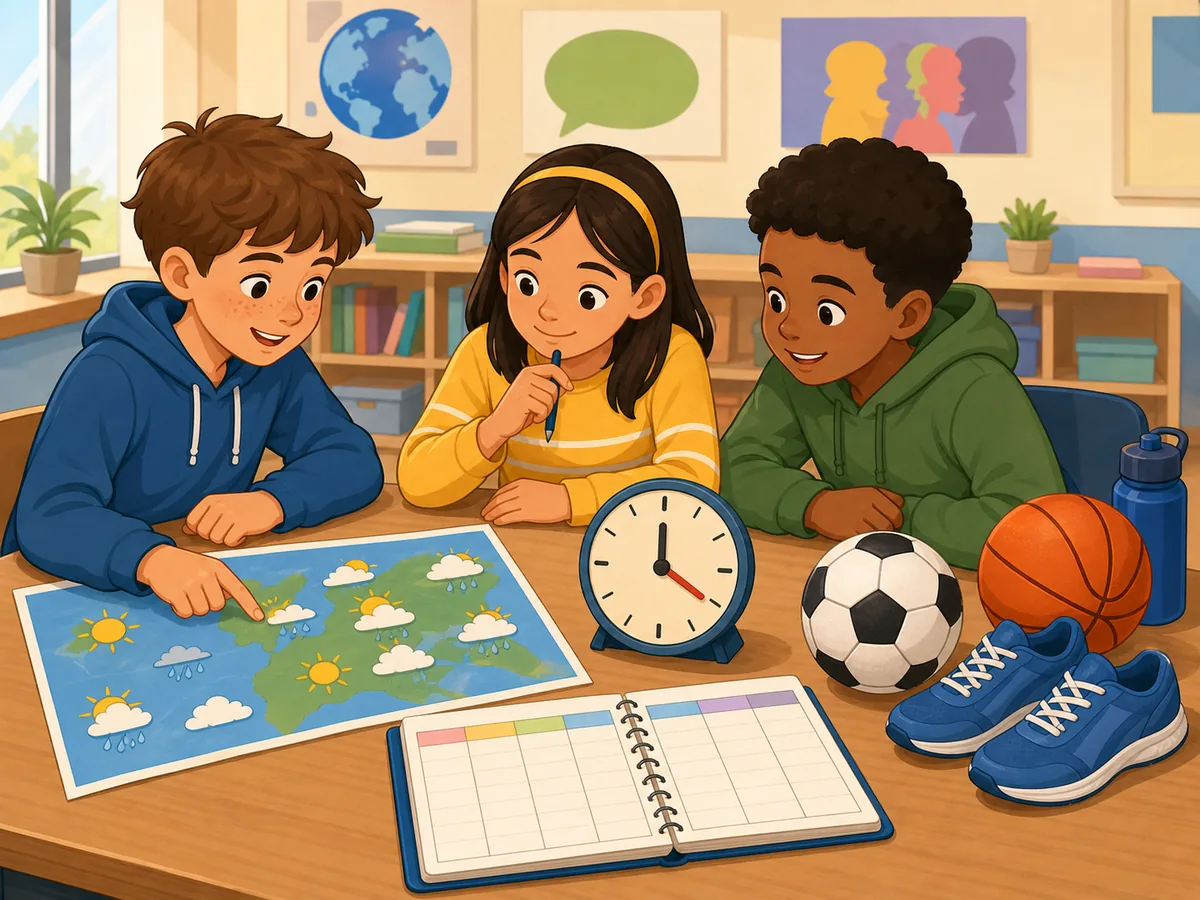
Hi! I'm Oliver and I'm eleven. I live in Brighton, a town by the sea in England. On school days I get up at quarter past seven and I usually go to school by bike. On Tuesdays and Thursdays I have swimming lessons after school. I never watch TV before dinner because I always do my homework first.
Last Saturday it was sunny and warm, so I went to the beach with my cousin Emma. We played volleyball and had fish and chips for lunch. The weather forecast says it's going to rain next weekend, so we're going to visit a museum.
Volver a leer el texto
Hi! I'm Oliver and I'm eleven. I live in Brighton, a town by the sea in England. On school days I get up at quarter past seven and I usually go to school by bike. On Tuesdays and Thursdays I have swimming lessons after school. I never watch TV before dinner because I always do my homework first.
Last Saturday it was sunny and warm, so I went to the beach with my cousin Emma. We played volleyball and had fish and chips for lunch. The weather forecast says it's going to rain next weekend, so we're going to visit a museum.
Libros en inglés para 5.º Primaria
-
 Libro en inglés
Charlie And The Chocolate Factory
Ver libro ›
-
 Libro en inglés
There S A Boy In The Girls Bathroom
Ver libro ›
-
 Libro en inglés
The Wizards Of Once
Ver libro ›
Enlaces de afiliado: si compras con ellos, fichas.es recibe una pequeña comisión sin que te cueste más.
Para familias y profes
- Usar el presente simple en las rutinas, con -s o -es en la tercera persona y los adverbios de frecuencia
- Elegir entre presente simple, presente continuo, pasado simple y going to según la expresión de tiempo
- Decir la hora con quarter past, half past y quarter to
- Comprender un texto corto sobre la semana de un niño y responder a preguntas sobre él
- Lee el recuadro con la regla y los ejemplos
- Fíjate en las palabras de tiempo (yesterday, every day, tomorrow) antes de elegir el verbo
- Comprueba cada ejercicio antes de pasar al siguiente
¿Algo no va bien en esta ficha? Avísanos
Sigue practicando


Sobre esta ficha
Esta ficha interactiva de Inglés para 5.º de Primaria repasa las rutinas, la hora, el tiempo y los verbos en presente simple, presente continuo, pasado simple y going to, además de los comparativos y los superlativos.
Incluye elección múltiple con una ilustración, una lectura con preguntas, completar, ordenar una pregunta, relacionar preguntas y respuestas y clasificar expresiones de tiempo, con corrección automática.